Personal Protective Equipment (PPE)

Type of Safety goggles

ANSI Z87.1

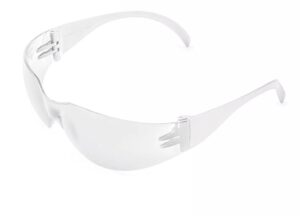
ANSI Z87.1 is a widely recognized standard in the United States that sets forth requirements for protective eyewear, including safety glasses, goggles, and face shields. It ensures that these products provide adequate protection against various workplace hazards like impact, dust, chemicals, and UV radiation.

Key Features:
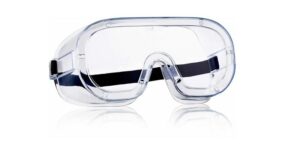
  • Impact Resistance: Eyewear must withstand high-speed impacts from flying debris or particles.
  • Optical Quality: Lenses must meet specific clarity and distortion standards.
  • Frame Strength: Frames must be durable and able to hold the lenses securely.
  • Markings: ANSI Z87.1 eyewear is marked with a “Z87” on the frame or lens, indicating compliance with the standard. If the eyewear is rated for high impact or specific hazards, it will be marked as Z87+.
  • Protection Levels: Includes different levels of protection based on the risks (e.g., impact resistance, UV protection, and liquid splash).

EN 166

EN 166 is the European standard for personal eye protection that provides a comprehensive guideline for the design, testing, and use of eye protection products such as safety glasses, goggles, and face shields. It applies to protection against mechanical, optical, thermal, and chemical hazards.

Key Features:
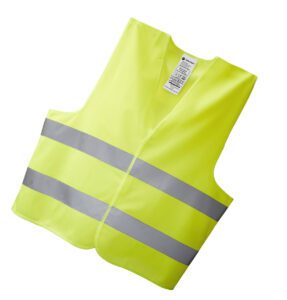
  • Optical Quality: Lenses must meet specific standards for clarity and the absence of distortion.
  • Impact Protection: Protection against mechanical impacts, including high-velocity impacts.
  • Marking: EN 166-rated eye protection is marked with the symbol “EN 166” followed by specific numbers indicating the type of protection it offers. For example, “B” indicates medium impact protection, while “F” refers to low-energy impacts.
  • Lens Protection: Includes specifications for UV protection, anti-fog coatings, and scratch resistance.
  • Resistance to Hazards: It also covers protection against heat, liquid splashes, molten metals, and radiation.

Type of High-Visibility Clothing

ANSI/ISEA 107

ANSI/ISEA 107 is the American standard for high-visibility safety apparel, developed by the American National Standards Institute (ANSI) and the International Safety Equipment Association (ISEA). It sets the criteria for high-visibility clothing that protects workers in environments where they are at risk of being struck by moving vehicles or equipment.

Key Features:
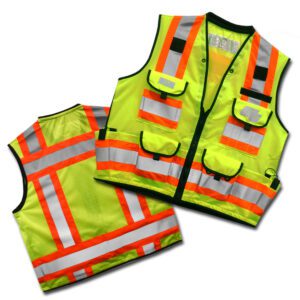
    • Visibility Classification: Similar to EN ISO 20471, ANSI/ISEA 107 classifies high-visibility apparel into three classes based on the level of risk:
      • Class 1: Provides basic visibility for low-risk environments where background lighting is adequate (e.g., parking lots).
      • Class 2: For moderate-risk environments, such as roadways with slower traffic or construction sites.
      • Class 3: Designed for high-risk environments where workers are exposed to fast-moving vehicles, requiring the highest level of visibility (e.g., highways and nighttime work).

EN ISO 20471

EN ISO 20471 is a European standard that specifies the requirements for high-visibility clothing, designed to ensure that workers are visible to others in hazardous conditions where visibility is compromised, such as low-light conditions, heavy traffic areas, or construction zones.

Key Features:
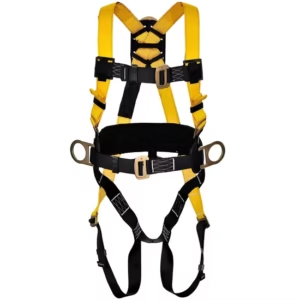
    • Visibility Classification: The standard classifies high-visibility clothing into three classes (Class 1, Class 2, and Class 3) based on the amount of reflective material and the surface area of fluorescent material on the garment.
      • Class 1: Lowest level of visibility, typically used for low-risk situations or where background lighting is sufficient.
      • Class 2: For moderate-risk situations, providing a higher level of visibility.
      • Class 3: Highest level of visibility, used in high-risk environments, ensuring the wearer is visible from all directions, even at great distances.

Type of Fall Protection Systems

ANSI Z359

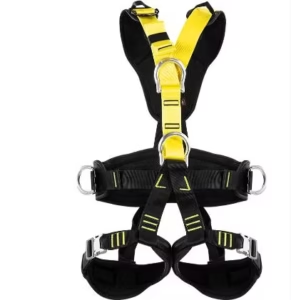
ANSI Z359 is a comprehensive set of standards developed by the American National Standards Institute (ANSI) to govern fall protection in the workplace. The Z359 series addresses various fall protection equipment, including personal fall arrest systems (PFAS), lanyards, harnesses, and related accessories. The series ensures that equipment is designed, tested, and maintained to provide maximum safety for workers at height.


Key Features of ANSI Z359:

  • Comprehensive System: ANSI Z359 covers all aspects of fall protection systems, including design, performance, and testing requirements. It ensures the equipment provides adequate protection and prevents injury in the event of a fall.
  • Performance Testing: Equipment covered by this standard must pass performance testing to confirm its effectiveness in preventing falls and minimizing impact forces.
  • Personal Fall Arrest Systems (PFAS): The standard covers requirements for harnesses, lanyards, lifelines, and anchorage connectors used as part of a PFAS.
  • Safe Use and Maintenance: ANSI Z359 emphasizes proper training, usage, and maintenance of fall protection equipment to ensure its effectiveness in real-world applications.

Types of Fall Protection Equipment:

  • Harnesses: Ensure that the body is securely supported in the event of a fall.
  • Lanyards and Lifelines: Provide the connection between the worker and the anchorage point.
  • Anchorage Connectors: Used to secure the fall protection system to a solid structure.

EN 361

EN 361 is a European standard that sets requirements for personal protective equipment used in fall arrest systems. It specifically addresses the design, performance, and testing of full-body harnesses used in preventing fall injuries. EN 361 is part of the broader EN 363 standard, which governs fall protection systems in the European Union.


Key Features of EN 361:
  • Full-Body Harness: EN 361 applies to the design and testing of full-body harnesses, which are critical components of a personal fall arrest system.
  • Design and Comfort: The standard ensures that harnesses are designed to be comfortable for long-duration wear, while also offering sufficient support and protection in the event of a fall.
  • Performance Requirements: The harnesses must be tested to ensure they provide proper force distribution across the body during a fall to prevent injury. The standard also tests the harnesses for durability, strength, and comfort.
  • Strength and Durability: EN 361 requires harnesses to withstand a specified weight and force, ensuring that they will perform under realistic fall conditions.
  • Connection Points: The standard specifies the location and strength of attachment points on the harness (such as dorsal and sternal points) to safely secure the worker.
  • Comfort and Fit: EN 361 also addresses ergonomic considerations to ensure the harness fits well, allowing for ease of movement while maintaining safety.

Type of Safety Footwear

ISO 20345

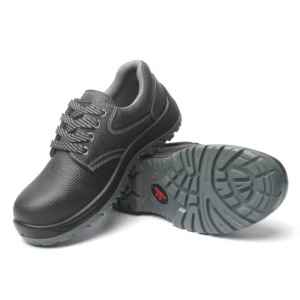
ISO 20345 is an international standard that specifies the basic requirements for protective footwear designed to safeguard the feet of workers from hazards in the workplace. It applies to footwear intended for general use in industrial settings where workers face the risk of foot injury from mechanical, thermal, electrical, or chemical hazards.


Key Features of ISO 20345:

    • Toe Protection: Footwear must have reinforced toe protection to withstand impacts and compression. Typically, this is achieved with a steel toe cap or composite toe cap.
    • Slip Resistance: The outsole must provide sufficient traction to prevent slipping in both dry and wet conditions.
    • Anti-Static or Conductive Properties: Footwear may be designed to discharge static electricity or provide protection against electrical hazards.
    • Puncture Resistance: Safety footwear must be designed with puncture-resistant materials in the sole to protect against sharp objects on the ground.
    • Water Resistance: Footwear may be designed to resist water penetration, keeping the feet dry in wet conditions.
    • Comfort Features: Comfort elements such as shock absorption, arch support, and breathability are also considered.
    • Upper Material: The upper part of the footwear should be made of durable materials like leather or synthetic composites.

Categories of Footwear under ISO 20345:
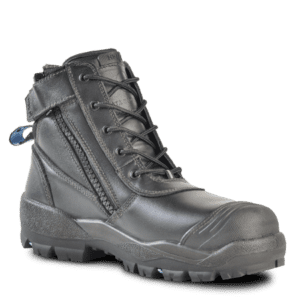
    • S1: Basic protective footwear with toe protection, anti-static properties, and energy absorption in the heel.
    • S2: Includes S1 features and additional water resistance.
    • S3: Includes S2 features and additional puncture-resistant insoles.

ASTM F2413

ASTM F2413 is a safety standard established by ASTM International (formerly known as the American Society for Testing and Materials). It outlines the performance requirements for protective footwear in the United States, ensuring that it provides protection from common workplace hazards such as impact, compression, electrical hazards, and foot puncture injuries.


Key Features of ASTM F2413:

    • Toe Protection: Similar to ISO 20345, ASTM F2413 requires that footwear include protective toe caps made of materials like steel, aluminum, or composite materials.
    • Compression and Impact Resistance: Footwear must be able to withstand a specified amount of force from impact and compression (e.g., 75 or 50 joules of impact energy, and 1,500 or 2,500 pounds of compression force).
    • Slip Resistance: ASTM F2413 requires safety footwear to provide effective traction to reduce the risk of slipping.
    • Puncture Resistance: The footwear must offer protection against sharp objects that could puncture the sole.
    • Electrical Hazard Protection: For electrical hazard (EH) protection, the footwear is required to provide insulation that reduces the risk of electrical shock.
    • Metatarsal Protection: Some footwear options may include additional metatarsal protection, covering the area above the toes to protect against falling objects.
    • Water Resistance: ASTM F2413 also provides guidelines for the water resistance of footwear to keep the feet dry in wet conditions.
    • Comfort and Fit: The standard also considers comfort factors, ensuring that the footwear is comfortable for long-term wear and does not restrict movement.

Types of Footwear Under ASTM F2413:

    • Class I: General protective footwear (for non-electrical hazards).
    • Class II: Protective footwear that also provides electrical hazard protection.

Type of Industrial Safety Helmets

EN 397

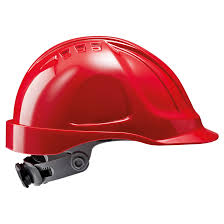
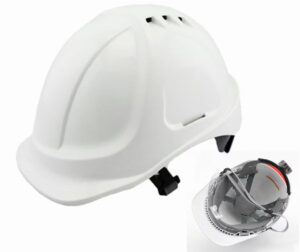
EN 397 is a European standard that specifies the performance requirements for industrial safety helmets (hard hats) used in a wide range of industries to protect workers’ heads from impact and other hazards in the workplace.


Key Features of EN 397:

    • Impact Protection: Helmets must provide protection against impact to the top of the head from falling objects.
    • Penetration Resistance: The helmet must resist penetration from sharp objects to ensure the safety of the wearer.
    • Flame Resistance: The outer shell of the helmet must be resistant to flames and heat to prevent ignition or melting in high-temperature environments.
    • Electrical Resistance: Some helmets are designed with electrical resistance properties to reduce the risk of electric shock (though this is optional and depends on specific job requirements).
    • Chin Strap: Helmets must be equipped with a chin strap that secures the helmet to the head, preventing it from falling off during movement or in high-risk environments.
    • Ventilation: Certain types of helmets have ventilation systems to provide comfort by allowing airflow, keeping the wearer cooler in hot working conditions.
    • Comfort Features: Inner padding and adjustable headbands are included to ensure a proper fit for the wearer, enhancing comfort during long working hours.


Types of EN 397 Helmets:

    • Basic Industrial Helmet: Offers basic protection against impact and penetration.
    • Electrical Insulation Helmets: Designed with added insulation for workers exposed to electrical hazards.
    • Chin Strap Helmets: Equipped with a chin strap for secure fitting during high-risk activities.

ANSI/ISEA Z89.1

ANSI/ISEA Z89.1 is an American standard that sets the requirements for industrial safety helmets used in workplaces to protect against head injuries. The standard outlines the performance, testing, and labeling requirements to ensure the helmet can effectively protect workers from impacts, electrical hazards, and more.


Key Features of ANSI/ISEA Z89.1:

    • Impact Protection: The helmet must provide adequate protection against impacts from falling objects and other head trauma risks.
    • Penetration Resistance: The helmet should prevent sharp objects from penetrating the surface and reaching the head.
    • Electrical Hazard Protection: Helmets can be designed to offer electrical insulation to protect against electric shock. Class E (Electrical) helmets are rated for use in environments with electrical hazards.
    • Flame Resistance: Helmets must resist flames and heat to prevent ignition in high-temperature environments.
    • Chin Strap: Helmets must have a secure chin strap to keep them in place during use, especially when working at heights or in dynamic environments.
    • Comfort and Fit: The inner components of the helmet, including the suspension system and padding, must be adjustable to provide comfort and a secure fit for the wearer.


Classes of ANSI/ISEA Z89.1 Helmets:

    • Class G (General Use): Provides impact protection and limited electrical hazard protection (up to 2,200 volts).
    • Class E (Electrical): Provides impact protection and electrical insulation protection (up to 20,000 volts).
    • Class C (Conductive): Provides impact protection but offers no electrical insulation.


Types of Helmets:

    • Type I: Provides protection to the top of the head.
    • Type II: Provides protection to the top and sides of the head (designed for more comprehensive coverage).